

Ludwig Göransson: The Odyssey of a unique method
3 September 2026
At MEMBRE® Society, we enjoy conceiving and offering our members events built around music. A recital in a venue closed to the public, an encounter with a performer, a guided listening session before a release, or a dinner punctuated by an ensemble chosen for the occasion: music is one of the experiences the circle prioritises, as it brings people together without the need for words.
We value this so highly because of the effect music has on its listeners. It gives form to joy, sorrow, a sense of achievement, a surge of motivation, or moments of sadness. A few notes are sometimes enough to bring back a specific memory, happy or painful, a period of life, or a face. It is a common language that transcends cultures and generations, and this is precisely what we seek to share during our gatherings.
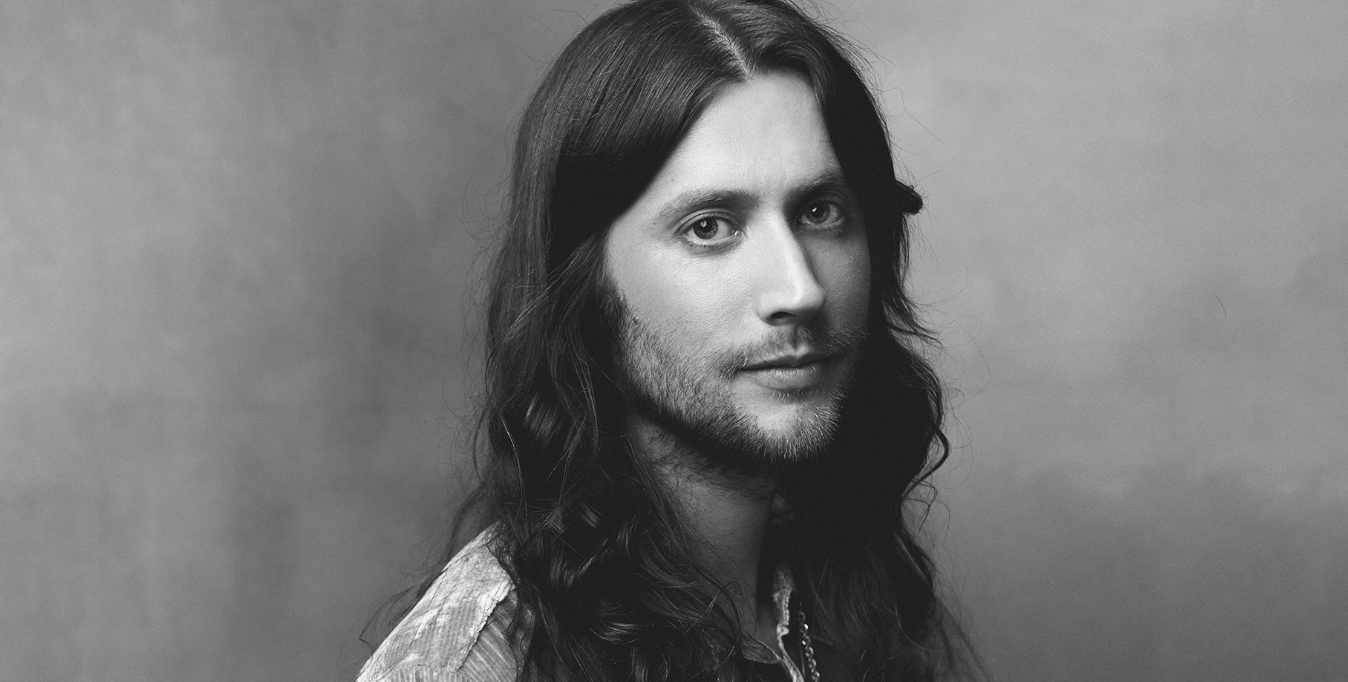
It is with this in mind that we dedicate this article to a virtuoso of film music: Ludwig Göransson. His work illustrates this power of evocation well. When he composes, he does not look for a beautiful melody first; he looks for the right sound, the one that will trigger the intended emotion in the viewer at the right moment. For The Odyssey by Christopher Nolan, an adaptation of Homer’s poem expected in theatres on 15 July 2026, he pushed this requirement to the point of having instruments reconstructed that are over two thousand years old and travelling to record voices in the mountains of Albania.
This article reviews his career, the genesis of this soundtrack, and what his way of working says about a certain idea of excellence—the one that MEMBRE® Society defends in each of its experiences.
Who is Ludwig Göransson, the composer of The Odyssey?
Ludwig Göransson is a Swedish composer and producer born in 1984. His career unfolds along two parallel paths that explain his singularity. In cinema and series, he has scored the music for Fruitvale Station, the Creed trilogy, Venom, Black Panther, The Mandalorian, Tenet, Oppenheimer, and then Sinners in 2025. In popular music, he has collaborated for over ten years with Donald Glover, co-producing the Childish Gambino project and co-writing the track This Is America, which won Grammy Awards in 2019 for Record and Song of the Year.
He won the Oscar for Best Original Score for Black Panther in 2019, and then for Oppenheimer in 2024. The Odyssey marks his third collaboration with Christopher Nolan, following Tenet and Oppenheimer. It is this dual grounding—Hollywood blockbuster on one side, hip-hop culture and studio production on the other—that leads him to treat every score as a sound problem before it is a writing problem.
“Never have a recipe”: what does the Göransson method consist of?
Ludwig Göransson’s method consists, literally, of not having one. The composer imposes two starting rules on himself. The first: never reuse the same instrument from one project to the next to lay down his initial ideas. The second: approach every film as if he were composing for the very first time. The goal is to remain on unknown ground, where automation no longer works and every choice must be justified rather than reproduced.
Yet the pattern repeats from one film to the next. Göransson starts with sound material linked to the narrative’s universe, most often an instrument or a voice. He then confronts it with the real traces of that sound: field recordings, historical reconstructions, written sources, and testimonies from practitioners. Then he passes this material through contemporary technology—synthesis and digital processing—until he obtains a texture that belongs neither entirely to the past nor entirely to the present. What the phrase “never have a recipe” describes is organised unlearning, project after project.
Why does the music for The Odyssey have no orchestra?
The initial constraint came from Christopher Nolan himself: no symphonic orchestra. The director’s reasoning is simple. The orchestra as we know it did not exist at the time of the story, and an orchestral treatment would have brought the film closer to other great ancient epics already brought to the screen and already set to music. Göransson therefore had to start again from the material actually available in the Bronze Age, the period in which Nolan sets his adaptation of Homer.
This choice transformed the work of composition into a work of investigation. Before writing a single note, the composer spent months identifying which instruments existed, what they looked like, how they sounded, and who, today, still knows how to play them. The soundtrack for The Odyssey was born from this research as much as from the writing.
Which ancient instruments were reconstructed for The Odyssey?
Two ancient Greek instruments were played on faithful reconstructions. The lyre, an iconic string instrument of ancient Greece, and the aulos, a double-reed flute that was one of the most widespread instruments in the Greek world for nearly a thousand years. The performers worked from iconography, philological sources, and remains dated from the sixth to the fifth century BCE. As no aulos reed survived, its manufacture had to be reconstituted through experimentation and playing by several hands.
To these instruments are added about thirty-five bronze gongs of different sizes, chosen for their direct echo of the Bronze Age, then layered with synthesisers. The result sits deliberately between archaeological reference and contemporary electronic production: an ancient sound, but reworked with today’s tools.
Scrap metal, railings, and air conditioners: how does Göransson find his sounds?
True to his rule of stepping out of his comfort zone, Ludwig Göransson did not limit himself to instruments. He recorded himself hitting walls, railings, scrap metal, and air conditioning units in order to extract unique percussive textures. These found sounds, captured outside of any studio, are then sorted, transformed, and integrated into the score like any other instrument.
This practice is not a gimmick. It stems directly from the method: when the sound library does not offer what one is looking for, one goes to look for it elsewhere, even if it means hitting a stair railing. The music of The Odyssey is partly made of these raw, industrial materials that were never intended to accompany a story nearly three millennia old.
Why did Ludwig Göransson go to record voices in Albania?
Because the voice he was looking for was not in any publisher’s catalogue. Göransson spent nearly a week in southern Albania to record Albanian iso-polyphony, a traditional multi-voice chant inscribed on the UNESCO Representative List of the Intangible Cultural Heritage of Humanity. The composer states he had never heard it in a film, which, according to his logic, made it exactly the right starting point.
On site, he also recorded flutes played by shepherds, according to a practice passed down for generations. One detail sums up the spirit of the approach: the recording sessions stopped around 6:00 PM, because the shepherds woke up at 4:00 AM to tend to their flocks. Göransson does not bring tradition into the studio; he goes to capture it in its real conditions, then extracts material that he reworks. The film’s music does not imitate folklore: it is built from recordings of that folklore.
What role does James Blake play in the soundtrack?
British singer and producer James Blake provides vocal parts designed for the film’s emotional breathing, where the ancient instruments and metallic percussion establish tension and scale. This collaboration further illustrates the same logic: associating a contemporary, immediately identifiable timbre with sound material reconstructed from sources centuries old.
What the Göransson method says about bespoke work
The story of this score is one of constant refusal of ready-made solutions. Reconstructing a lost instrument rather than sampling an approximation. Travelling for an entire week for a voice that no library offers. Testing a railing before a studio brass section. Each of these choices costs time and is only justified by the final result—that is, by the emotion that the music gives birth to.
It is a logic that MEMBRE® Society recognises in its own profession, and which it finds in the musical events it organises for its members. A truly bespoke experience does not consist of choosing the best option from a catalogue, but of accepting the detour: the performer one goes to find, the venue one opens for a single evening, the programme one composes specifically for a restricted circle. The common denominator is not luxury as an outward sign, but the requirement for method and the care taken with shared emotion. Ludwig Göransson formulates it in his own way when he says he must, with every new film, step out of his comfort zone and find sounds he has never worked with before.
Frequently asked questions
Who composed the music for Christopher Nolan’s The Odyssey? The music for The Odyssey is composed by Ludwig Göransson, a Swedish composer who won Oscars for Black Panther and Oppenheimer. This is his third collaboration with Christopher Nolan after Tenet and Oppenheimer.
When is The Odyssey released in theatres? The Odyssey is released in France on 15 July 2026, distributed by Universal Pictures International France, two days before its release in the United States. The soundtrack album was released on 17 July 2026 by Back Lot Music.
Why is there no orchestra in the music for The Odyssey? Christopher Nolan asked Ludwig Göransson not to use a symphonic orchestra, as it did not exist at the time of the story. The composer started with Bronze Age instruments, complemented by synthesisers.
Which instruments are heard in The Odyssey soundtrack? One hears a Greek lyre and aulos reconstructed from ancient sources, about thirty-five bronze gongs, percussion struck on scrap metal and railings, Albanian vocal iso-polyphony, shepherd flutes, and James Blake’s vocals, all treated with synthesisers.
What is the link between Ludwig Göransson and This Is America? Ludwig Göransson co-wrote and co-produced This Is America by Childish Gambino, the musical project of actor Donald Glover. The track won the Grammy Awards for Record and Song of the Year in 2019.
The Odyssey in brief
Director: Christopher Nolan. Music: Ludwig Göransson. Cast: Matt Damon, Tom Holland, Anne Hathaway, Robert Pattinson. Genre: epic adventure. Duration: approximately 2h 52m. France release: 15 July 2026, Universal Pictures International France. Soundtrack: Back Lot Music, 17 July 2026.
This article by the MEMBRE® Society editorial team cross-references the composer’s public statements with the specialised press. It does not reproduce the soundtrack or the commentary of the cited videos.
— MEMBRE® Society, private club, concierge, and international luxury marketplace. We bring our members together around music and the emotions it shares, with the same requirement for method, from the first contact to the final result.